One thing I keep coming back to with AI is that we often talk about big failures as though they always come from big problems. But in practice, that is not always how systems break. Sometimes the problem starts with something so small you almost feel silly talking about it afterwards.
Recently, I was working on a Naive Bayes classification trial, testing how text was being processed and classified. Everything looked like it was working properly. The logic seemed right, the structure seemed right, and the system appeared to be doing what I expected it to do.
Then one small thing changed…
A single quotation mark was introduced into the workflow, and the result failed.
Now, on one level, that sounds like a simple coding issue. And yes, you could say, “well Chris, that’s just a bug.” Fair enough. But that is not really the point. The point is what that tiny mistake revealed about how fragile some AI and machine learning workflows can become when the surrounding governance system is not watching closely enough.
Because this is the thing… human beings make small mistakes all the time. We add the wrong character. We paste something slightly differently. We change a field name. We use a different format. We include a symbol the system did not expect. Most of the time, we do not even realise we have done it.
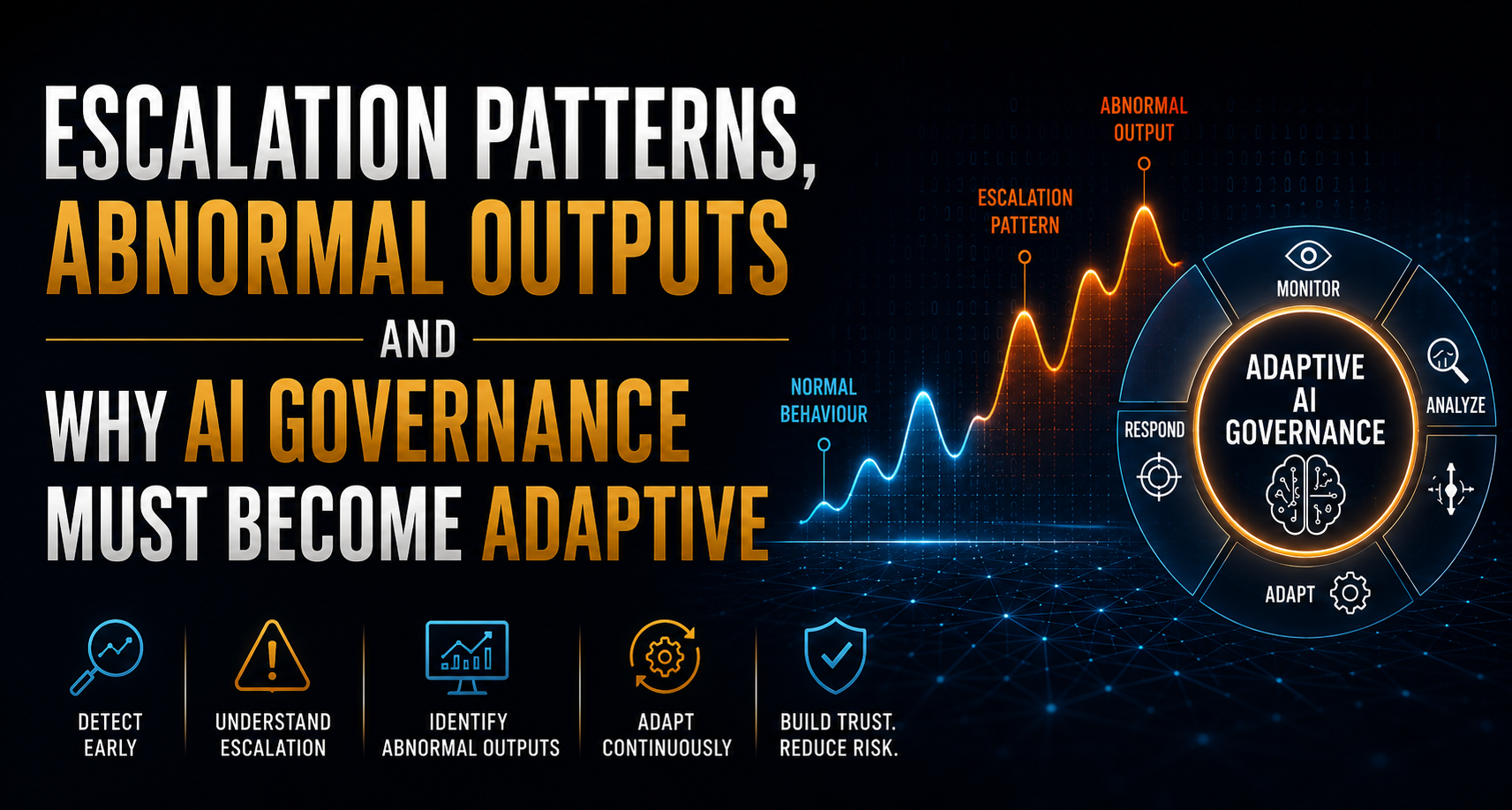
In traditional software, these mistakes can often be caught through testing, validation or error handling. But once you start moving into machine learning environments, especially where data, tokens, language and classification patterns matter, small changes can have disproportionate effects. The system may not fail in a neat, obvious way. It may simply produce an abnormal output.
That is where this becomes important from a governance perspective.
A static governance system probably would not pick this up. It might have reviewed the model before deployment. It might have checked the documentation. It might have looked at whether the system passed its initial test cases. But it would not necessarily detect that a small human input variation had started creating strange behaviour inside the operational workflow.
And that is the problem.
Static governance assumes the system is mostly stable after approval. But AI systems do not live in stable environments. They sit inside messy workplaces, changing workflows, shifting data, human shortcuts, interface behaviours and all the strange little things people do when they are just trying to get their job done.
That is why abnormal outputs matter.
They are often the early signals that something is starting to drift. Not always catastrophically. Not always dramatically. Sometimes it is just a slightly odd classification, an unexpected confidence score, an inconsistent result or a pattern that does not quite fit with what the system should be doing.
This is where escalation patterns become critical.
If the same type of abnormal output appears once, it may be noise. If it appears repeatedly, across certain workflows or after certain types of inputs, then it may be telling us something. It may be showing us that the system is reacting to a change in the environment that no one has formally recognised yet.
That is why I think adaptive learning governance systems are going to become essential.
A governance system should not just ask whether the AI passed an initial approval process. It should be watching how the system behaves over time. It should notice when outputs become unusual, when errors cluster, when confidence levels shift, when humans keep overriding the system, or when a particular workflow starts producing unexpected results.
That is the difference between static governance and adaptive governance.
Static governance asks, “Did we approve this system?”
Adaptive governance asks, “Is this system still behaving the way we expected?”
And that second question is where the future is heading.
Because as AI becomes more embedded in legal work, financial systems, healthcare, operational decision-making and workplace automation, we cannot rely on a governance model that only looks backwards. We need governance that can see what is happening now and learn from what the system is doing in real time.
The lesson from my Naive Bayes trial was simple but pretty powerful.
A single quotation mark should not become a major issue.
But in complex systems, small mistakes can become signals. And if we are not monitoring those signals, we may miss the early warning signs that something is starting to go wrong.
That is why adaptive governance matters. Not because it makes AI perfect. It never will.
But because it gives us a better chance of seeing the strange behaviour before it becomes a serious problem.And in this new AI environment, that might be the difference between a system we can trust… and one we only thought we could.
