Artificial Intelligence (AI) has promised transformative potential across industries, from healthcare to finance and beyond. Yet, the stark reality is that a significant number of AI projects fail to deliver on their lofty expectations. But why is this the case? In this exploration, we’ll dissect the key reasons behind the failure of many AI endeavours, focusing on issues like unclear objectives, uncertainty about project goals, and unrealistic expectations.
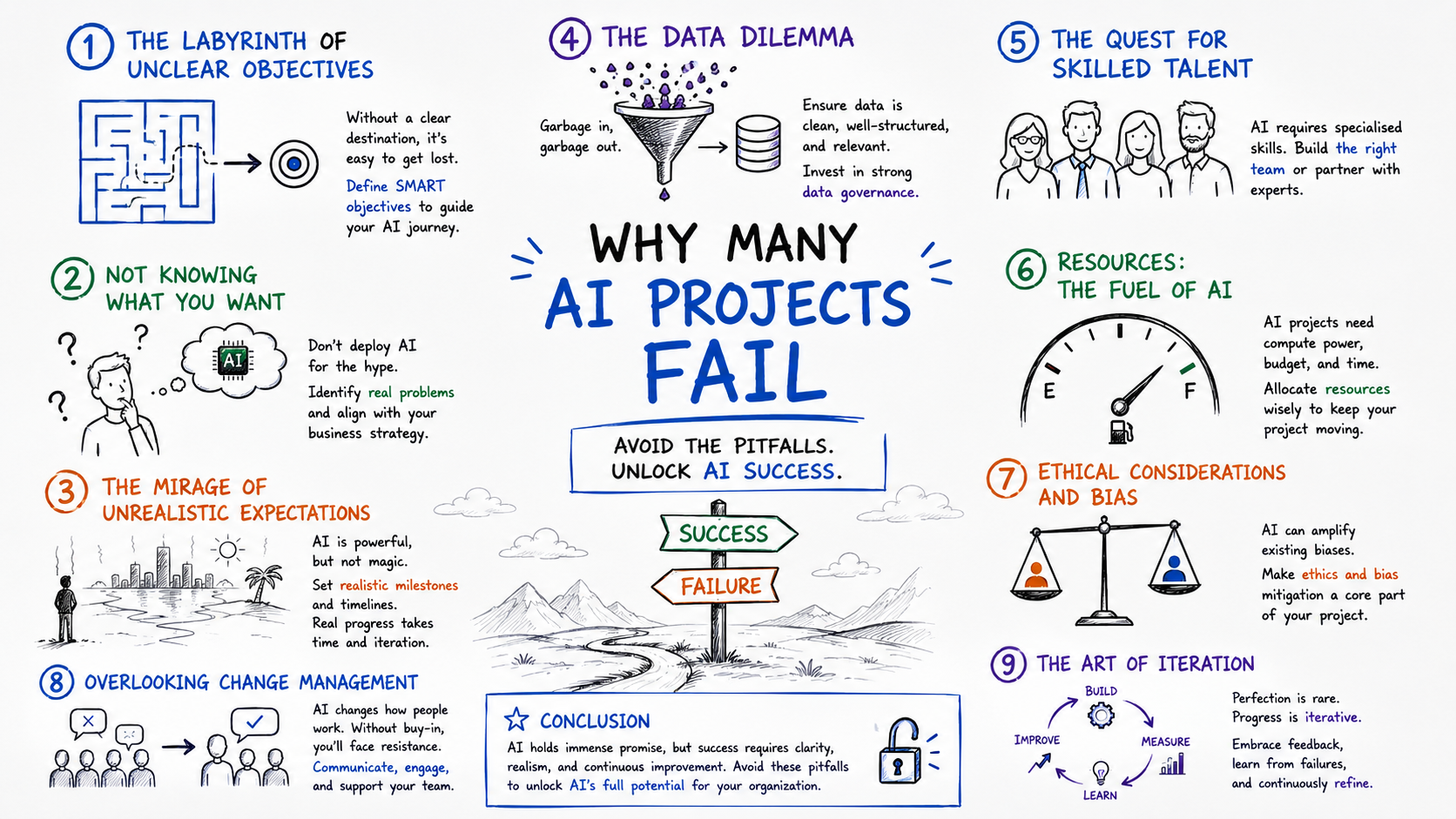
1. The Labyrinth of Unclear Objectives
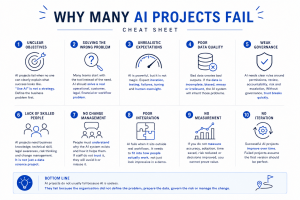
Imagine embarking on a journey without a destination in mind. Such is the plight of AI projects that lack well-defined objectives. To avoid this pitfall, organisations must establish crystal-clear goals from the outset. These objectives should be specific, measurable, achievable, relevant, and time-bound (SMART). They serve as the guiding light for the entire AI project, ensuring everyone is on the same page.
2. Not Knowing What You Want
In the age of AI, it’s easy to be seduced by its potential. However, this can lead to a common pitfall: not being sure what you truly need. Rather than jumping on the AI bandwagon for the sake of it, perform a comprehensive needs assessment. Identify specific problems or challenges that AI can address, aligning these with your overall business strategy.
3. The Mirage of Unrealistic Expectations
AI is indeed powerful, but it’s not a panacea for all business woes. Unrealistic expectations can set a project on a collision course with disappointment. To avoid this, it’s vital to recognize AI’s current limitations and set achievable milestones and timelines. Real progress often takes time and iterative refinement.
4. The Data Dilemma
In the realm of AI, data reigns supreme. However, the quality of your data can make or break a project. “Garbage in, garbage out” is a well-known adage in the field. Ensuring your data is clean, well-structured, and directly relevant to your project objectives is paramount. Consider investing in robust data governance to maintain data integrity.
5. The Quest for Skilled Talent
Building and deploying AI models demand specialised skills that not every organisation possesses in-house. Recognise the importance of assembling a team with the right expertise or consider partnering with AI experts. The right talent is your gateway to AI success.
6. Resources: The Fuel of AI
AI projects can be resource-intensive, requiring substantial computing power and budget allocations. Inadequate resources can hobble even the most promising initiatives. It’s crucial to allocate resources judiciously to support your AI endeavours adequately.
7. Ethical Considerations and Bias
AI can inadvertently perpetuate biases present in your data, leading to unintended consequences. Therefore, ethical considerations and bias mitigation must be integral to your project’s DNA. A responsible AI approach is not just a buzzword; it’s an imperative.
8. Overlooking Change Management
Implementing AI often necessitates changes in workflows and processes. Neglecting change management can result in resistance and project failure. To mitigate this risk, communicate the benefits of AI to your team and involve them in the transition.
9. The Art of Iteration
AI projects thrive on agility and iteration. Perfection on the first try is a rare feat. Embrace a feedback-driven approach, learn from failures, and continuously refine your models and strategies. Adaptability is key to sustained success.
Conclusion
In conclusion, while AI holds immense promise, its successful implementation demands a meticulous approach. Avoiding these common pitfalls requires thoughtful planning, realistic expectations, and a dedication to continuous improvement. By steering clear of these obstacles, organisations can unlock AI’s full potential for their growth and transformation.